One kennel, one breed: the Boxer.
Eight years, one specialty, and one rule that has never changed: never more puppies than we can know by name.
It started with a dog far too endearing not to breed.
Bella, our first Boxer, had a temperament our veterinarian called remarkable — sharp, playful, yet able to lie down calmly the moment a child came near. He was the one who suggested, after two years of screenings, that she deserved a litter.
That litter taught us the essential thing: a Boxer puppy handled every day grows into a sociable, confident adult; a puppy left to their own devices becomes an unmanageable bundle of energy. You can still see the difference today, litter after litter.
Eight years later, we still raise a single breed, in our home in Rosemont. Bella, now retired, still supervises every new litter from her favourite corner of the living room.
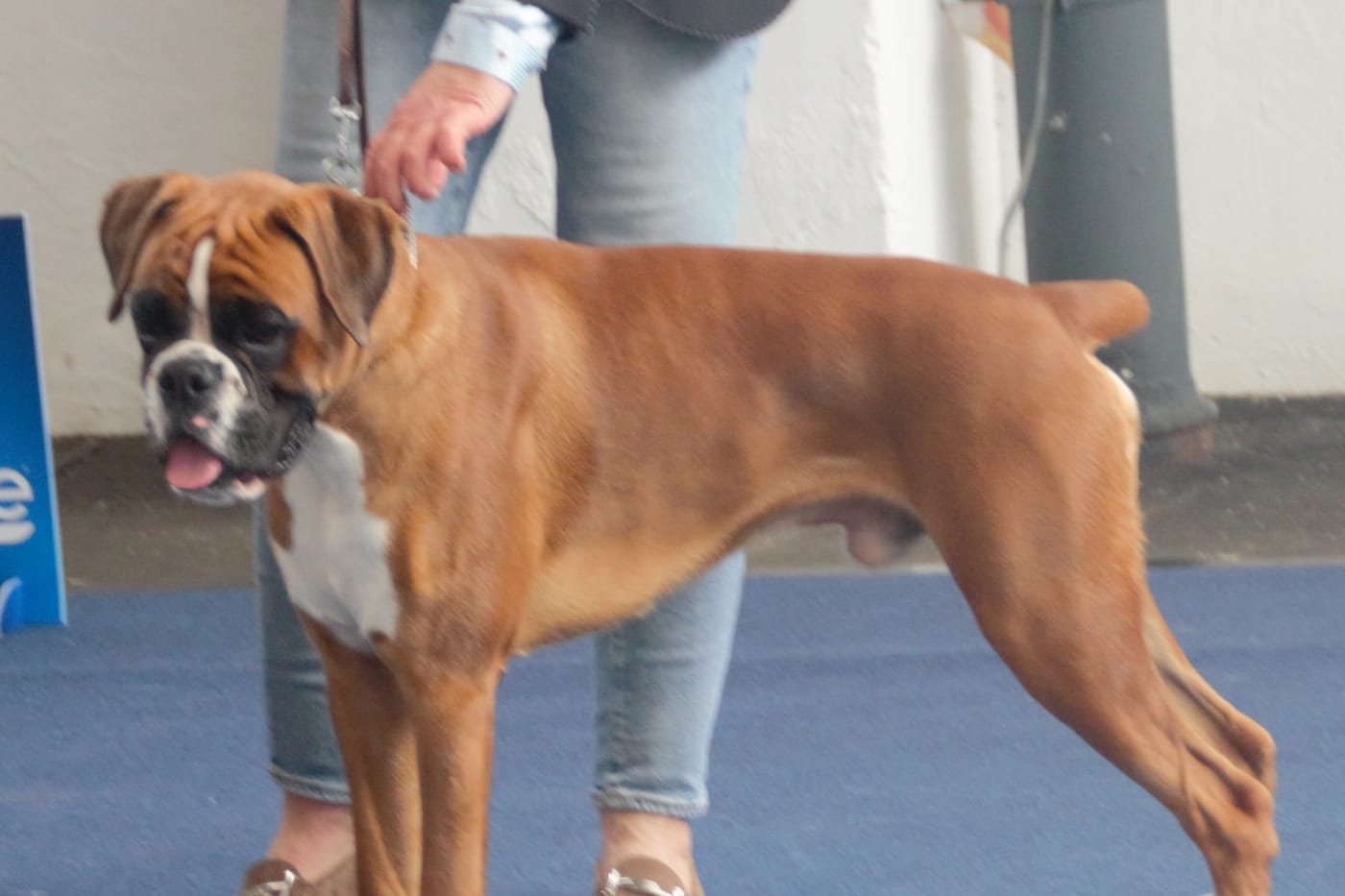
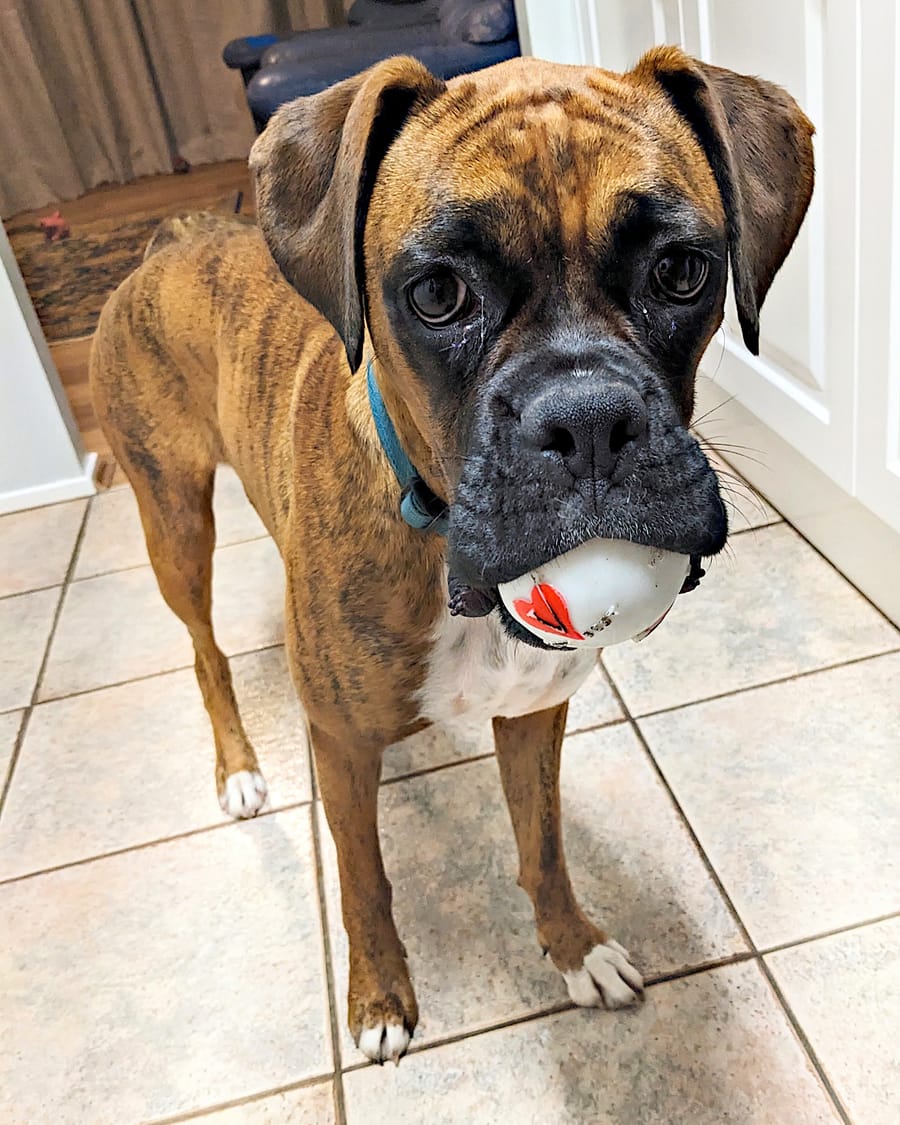
Fawn or brindle: same dog, different coat.
We don't diversify breeds. Knowing two coats well beats skimming ten.
Fawn line
From golden blond to deep red-fawn, always with the breed's signature black mask on the muzzle. It's the most recognizable Boxer coat — the one that's been on breed posters for a century.
Worth knowing: white markings (chest, paws, blaze) are common and normal on this line — never treated as a flaw here.
Brindle line
Dark stripes over a fawn base, in varying density — from light brindle that's almost fawn to dense brindle that's nearly black. Same temperament, same health standards, just a different coat.
Worth knowing: every puppy's pattern is unique — no two brindles ever look quite alike, a bit like fingerprints.
Some puppies are born with very extensive white markings (more than a third of the coat). That's a cosmetic trait, not a temperament issue — but veterinary literature links very extensive white to a slightly higher risk of congenital deafness in Boxers. Any puppy this applies to is tested (BAER test) before going home, and the result is handed over with the rest of the file.
What we screen for, and what we guarantee.
The Boxer is a wonderful breed, but not without known vulnerabilities — cardiac ones in particular. No breeding happens until both parents have completed the recommended screenings. Certificates are handed to you in person — not summarized, not "available on request".
Heart
Echocardiogram and auscultation by a veterinary cardiologist, screening for cardiomyopathy and subaortic stenosis — two known concerns for the breed.
Hips and elbows
X-rays evaluated by a recognized body, on both parents, before mating.
Thyroid and DNA
Thyroid panel (hypothyroidism is common in adult Boxers) and a DNA test for degenerative myelopathy.
A two-year guarantee against serious hereditary conditions, provided in writing. Replacement or refund, your choice — plus a lifetime take-back if you can no longer keep your dog, whatever the reason.
Come and see before you decide.
We welcome families by appointment, even without a firm plan. You'll see where the puppies are born, meet the parents, and get to ask the hard questions.
One piece of advice, even if you don't adopt from us: be wary of a breeder who offers to meet you in a parking lot or won't show you the mother. It's the most reliable signal there is.